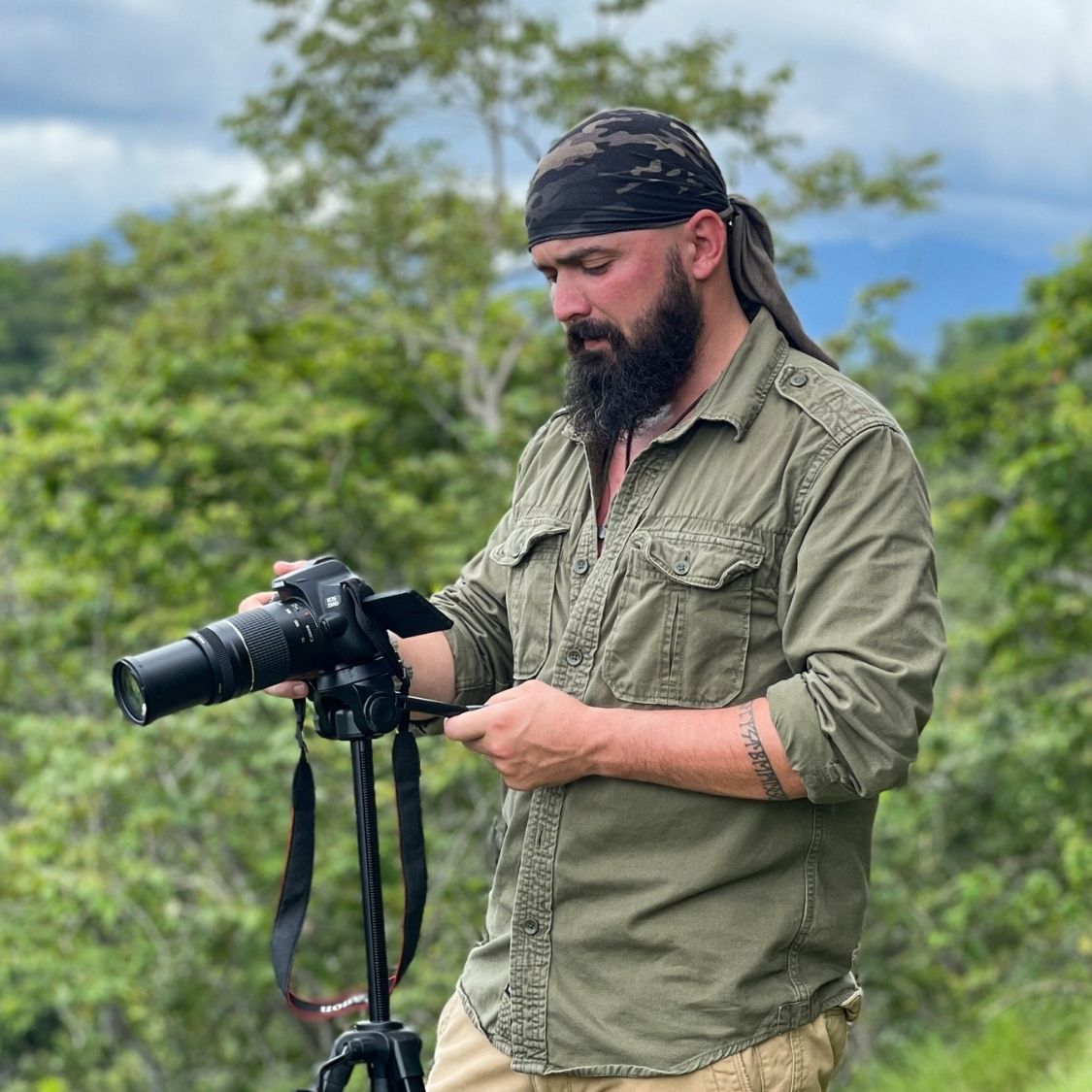
Beginning work in Asia: the first research cycle
The nearest research cycle will take place in Asia: Southeast Asia, Central Asia, Tibet, and then across the mountain systems of the Tian Shan, Altai, and Sayan Mountains. In early July, we are flying to the countries of Asia; preparations have already been made. Two people will be with me, helping to conduct my personal research. After some time, they will replace one another, since everyone has families, work, studies, and so on. I am deeply grateful to them for deciding to set out with me and take part in an important project.
So, the planned work is not a classical expedition in the usual sense, where the main goal is to reach protected places or study wild nature itself, because the data on isolated nature reserves have long existed in the form of numerous datasets and studies. Our task is more difficult: to understand how nature management is structured today in different regions, where existing protected areas are torn apart by human infrastructure, and where the formation of territories of complete ecological peace may be possible in the future.
I am very interested in Tibet; I will spend a great deal of time there, possibly up to three months. It is an extremely serious refuge of wild nature, one of the leading water and key ecological nodes of Asia. In general, this is precisely why China and India are actively in conflict over it: the main glaciers, high-mountain ecosystems, river headwaters are concentrated here, and all other territories downstream depend on the condition of Tibet.
According to recent scientific research — I believe I have already written about this in my materials — deforestation in the Amazon in South America, for example, directly affects the climate of Tibet. These are astonishing global processes. And if the Tibetan Plateau is to be designated as a TPES, what should be done about the fact that deforestation is taking place in the Amazon and striking Tibet? Should TPES not be created on both continents in close and strict cooperation between states that have never even heard of this?
Tibet connects mountains, rivers, plains, and the lives of millions of people. Without doubt, one territory of complete ecological peace must be deployed here.
In this same cycle, I will study other regions of Asia. Several major ecological processes are converging here today: forest loss, soil degradation, falling water levels, glacier melting, pressure from industrial agriculture on the last fragments of living ecosystems, as well as resource extraction, road expansion, and urban growth. Moreover, I would say that in Asian countries, nature is no longer simply being destroyed — it is inevitably degrading. Many processes cannot be reversed; for example, the Aral Sea cannot be restored to what it was.
Do you know what people in Asia, within systems of governance, are talking about? The need to be ready for imminent wars over water. But why not think instead about global cooperation and a transformation of the protected-area system?
We will analyze maps, numerous scientific studies, water basins, and the boundaries of protected areas — the existing protected-area system. We need to study where buffer corridors already exist or could be created, and how economic pressure and human life in general can exist along the edges of future TPES if the level of conflict is already catastrophic even right next to nature reserves.
This stage will take approximately one year. If I do not manage to complete it, we will work longer. In any case, we cannot conduct full scientific research: there is no funding and no access. Our task is to propose TPES boundaries and study whether their creation is possible at all. Everything else, like any deep scientific work, must already be carried out by scientific commissions with state funding if the necessary decisions on changing the protected-area system are adopted.
In general, we are preparing for departure, and I am already collecting data. Then, for the entire period indicated, I will be nomadic, studying the protected-area system in Asia. I also plan to work through the first TPES in the Russia–Central Asia linkage — our Altai, the Sayan Mountains, and the Tian Shan. I had already begun this work, and it needs to be completed. In a year, we will summarize the results, present the first boundaries of the proposed TPES, and I will release the team — it will be replaced — in order to move on to the next stage on other continents of the Earth.
© PAVEL PASHKOV