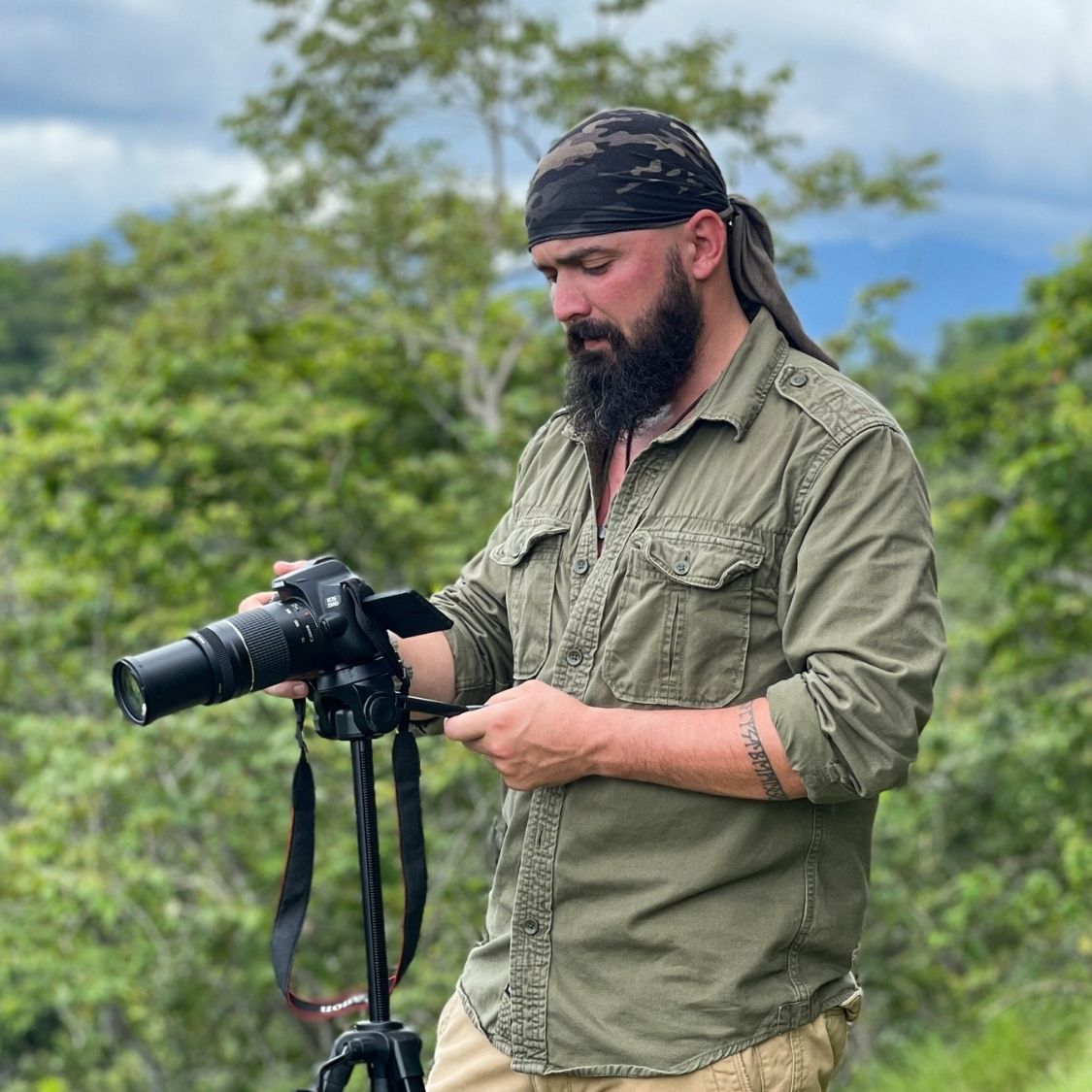
I’m on the road: the beginning of expedition work.
I am beginning my research in Central Asia — for now, I will share interim observations here. After that, I will move toward the equatorial belt, then to Tibet, and later return to the Tian Shan with a clearer understanding of the logic behind the methodology I will use for my research. This is the first stage, lasting at least one year.
I am interested in how the protected area system of Eurasia’s mountain ranges is structured: from the distant Sayan Mountains through Altai, which I conventionally call the “Greater Altai” region, onward to the Dzungarian Alatau, the Tian Shan, the Pamirs, the Kunlun Mountains, and the Tibetan Plateau. In my view, these are among the most sacred refuges of wild nature on the entire continent. That is why these regions are my primary focus.
I need to understand how possible it is to connect these territories into a single belt of Territories of Complete Ecological Tranquility, or into several allied Territories of Complete Ecological Tranquility linked by a common logic. I will now conduct my first observations in Central Asia and the Tian Shan: these are mountains, water, deserts and their dependence on mountains, animal migrations, state borders, and human interests. In other words, all of this is one vast and complex system, and nothing can be ignored.
I think that, first of all, we should work out the future boundaries of the Territories of Complete Ecological Tranquility together with the project of a large protected-area alliance. This should be a transboundary project that, in the future, could be proposed to mountain states.
I want to emphasize the following: it is extremely important for us not to mix different natural belts. For the proposed belt of Territories of Complete Ecological Tranquility from the Sayan Mountains and Altai to the Tian Shan and the Pamirs, the main core countries will be: Russia, Kazakhstan, China, Mongolia, Kyrgyzstan, Uzbekistan, and Tajikistan. Tajikistan is especially important: without the Pamirs and the Gissar-Alay, the entire Central Asian logic of the Territories of Complete Ecological Tranquility would be lost.
After that, the Himalayan-Tibetan high-mountain block must be expanded separately. This should already be another Territory of Complete Ecological Tranquility, or a separate allied belt covering the territories of countries such as China, India, Nepal, Bhutan, Pakistan, and Afghanistan. Here, the Tibetan Plateau, the Himalayas, the Karakoram, the Kunlun Mountains, and the Hindu Kush form a different natural framework.
The most difficult thing for me now will be to stop in certain key places in order both to study existing protected areas and to immerse myself in mapping, so that I can define the blocks of future Territories of Complete Ecological Tranquility. We cannot mix everything together indiscriminately: we need a clear logic and a systematic structure that will be understandable both to experts and to states.
I am on the road. For the coming years, I will live as a nomad.
© PAVEL PASHKOV